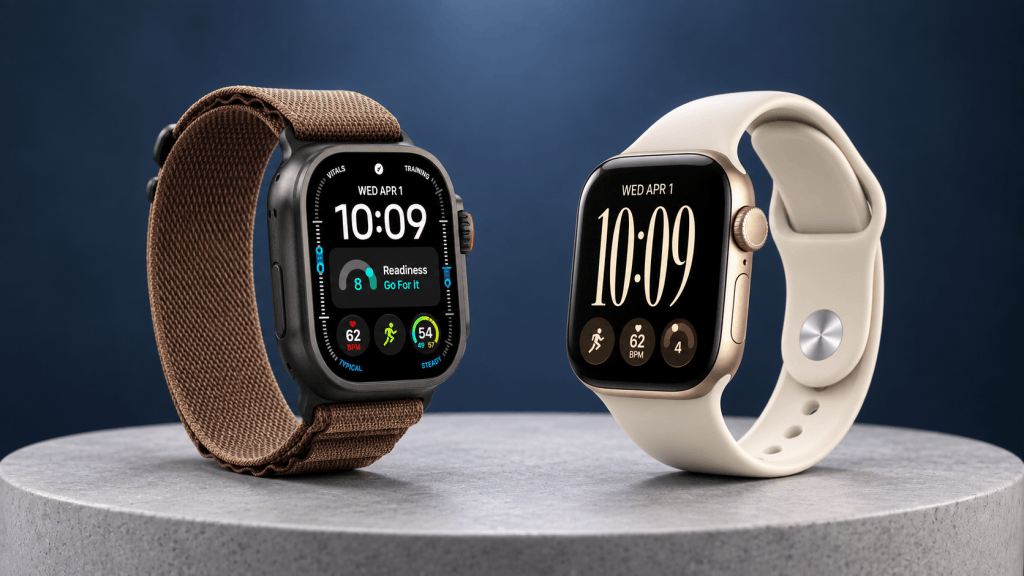
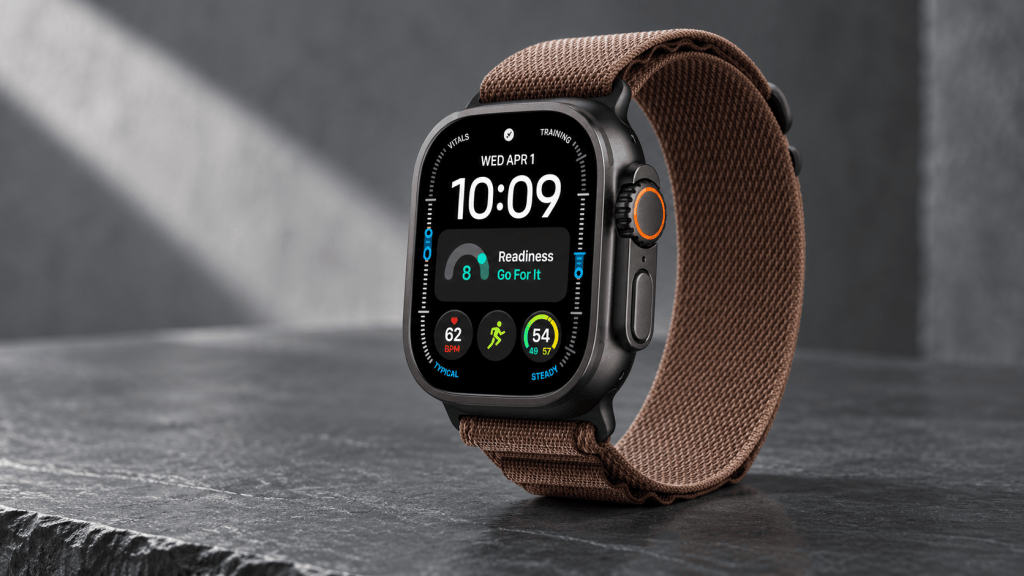
At first glance, Apple’s latest watches may not look particularly new. The Apple Watch Series 12 closely resembles the Series 11 and Series 10, while the Ultra 4 keeps the rugged design Apple introduced with the original Ultra.
Look beyond the familiar cases, however, and this generation becomes much more interesting.
Apple has focused most of its attention on health tracking, recovery data and battery life. The result is a pair of watches designed to compete more directly with Garmin, Whoop and the Oura Ring—not necessarily through a dramatic redesign, but by making the data collected throughout the day far more useful.
A Completely Redesigned Heart-Rate Sensor
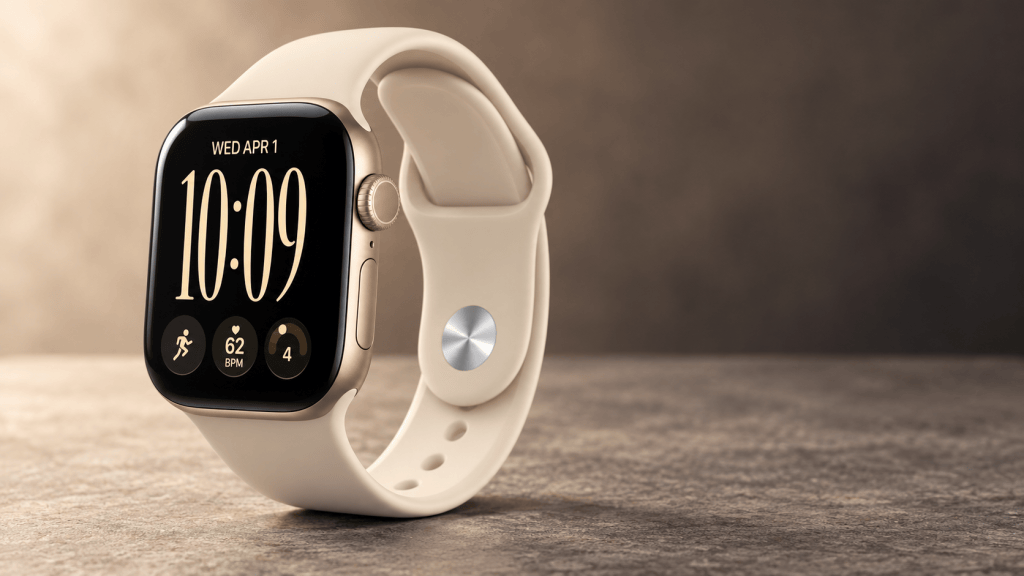
The biggest upgrade is Apple’s new Health Sensing System.
Apple has redesigned both the optical and electrical heart-rate sensors, adding more light emitters and photodiodes while improving contact between the sensor and the wearer’s skin. According to Apple, the new system provides its most accurate heart-rate tracking yet.
That is a significant claim, and one we would still like to see tested independently. Previous Apple Watches were already among the stronger consumer wearables for heart-rate tracking, so any meaningful improvement could make the Series 12 and Ultra 4 particularly attractive to runners and fitness-focused users.
The watches can now check background heart rate every five seconds—up to 60 times more frequently than the Series 11. Heart-rate variability, commonly known as HRV, can also be measured as often as every five minutes. Apple confirms these increased sampling rates for the Series 12.
More measurements do not automatically guarantee perfect accuracy, but they should give Apple a much more detailed picture of how the body responds to exercise, stress, sleep and recovery.
Apple Finally Introduces a Readiness Score
All of that additional health data supports one of the most useful additions to the new watches: Readiness.
Apple’s Readiness feature combines information such as HRV, resting heart rate, sleep and other vital measurements. It then provides a score from zero to ten representing how prepared the wearer appears to be for the day ahead.
Anyone familiar with Garmin’s Body Battery, Whoop’s Recovery score or Oura’s Readiness score will immediately understand the idea. Instead of forcing users to interpret several individual measurements, Apple turns them into a simpler daily assessment.
A strong score may suggest that your body is ready for a demanding workout. A lower score could indicate that additional rest or a lighter training day would be the more sensible choice.
Apple is entering this category later than some of its competitors, but it has one major advantage: millions of people already wear an Apple Watch. Those users will no longer need a separate device or third-party app to receive a straightforward recovery assessment.
Apple Health Becomes More Personal
The Health app is also receiving a substantial redesign, although some of its biggest changes will arrive through a later software update.
A new Insights section will use Apple Intelligence to examine different health measurements and offer personalized information about sleep, activity and general wellbeing. Instead of simply displaying charts, Apple wants the app to explain what those numbers could mean.
Apple is also introducing Health Age. This feature compares measurements such as activity levels, cardiovascular fitness and sleep with a person’s actual age. It then estimates whether the available health data reflects someone who appears physiologically younger or older.
A separate Longevity section will organize sleep, movement and heart-health information using a color-coded presentation. Apple says the redesigned Health app and its new Longevity features will arrive later in the year. The company outlined these additions during the Ultra 4 announcement.
Users in supported regions will also have more options for storing and reviewing laboratory results. As always, these measurements should be treated as useful personal information rather than a replacement for professional medical advice.
The New S11 Chip Brings More Intelligence to the Wrist
Both the Series 12 and Ultra 4 are powered by Apple’s new S11 chip.
The faster processor and upgraded Neural Engine support several features that would have been difficult to handle efficiently on earlier models. Sound Recognition, for example, can identify noises such as a doorbell, alarm, barking dog, crying baby or emergency siren. The watch can then display an alert, making the feature especially useful for people with hearing difficulties.
Apple is also expanding the watch’s audio-intelligence abilities. These features are intended to help users recover a detail they may have missed and create useful summaries from spoken information.
Privacy will naturally be a concern whenever a wearable is listening for sounds. Apple says sensitive health data is protected through on-device processing and encryption. When health information is synchronized through iCloud with two-factor authentication enabled, it is end-to-end encrypted and cannot be accessed by Apple. Apple explains its health-data protections here.
A Cleaner Modular Watch Face
Apple has introduced a redesigned Modular watch face that places the most important information within easier reach.
Readiness, sleep and activity information can be displayed directly on the watch face, reducing the need to open several apps. It is not the flashiest upgrade, but it fits the direction Apple is taking with this generation: collecting more data while making it easier to understand.
Ultra 4 Gets Longer Battery Life
Battery life remains one of the most important differences between the standard Apple Watch and the Ultra.
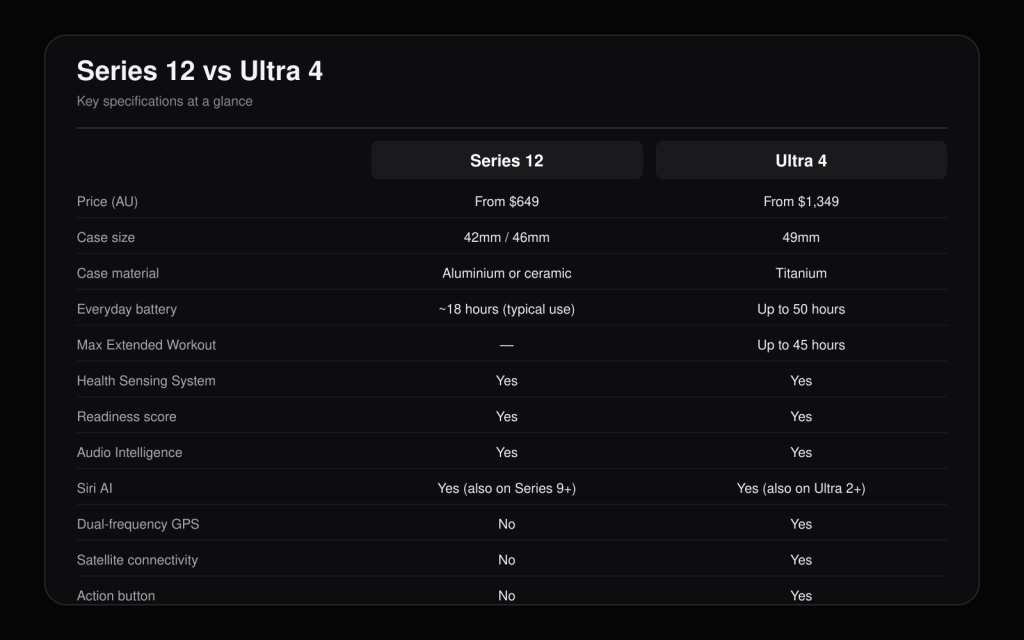
The Series 12 offers up to 24 hours of normal use, while the Ultra 4 is rated for approximately 50 hours under Apple’s standard multi-day testing. That gives the Ultra enough power for roughly two days of regular use, although actual results will depend heavily on GPS, cellular connectivity, display settings and workout tracking.
For outdoor activities, Apple advertises up to 45 hours of workout tracking in its most aggressive extended mode. Reaching that figure requires compromises: certain alerts and workout metrics are disabled, while GPS and heart-rate collection may be reduced.
That setting will not be ideal for every athlete, but it could be useful during ultramarathons, multi-day hikes and other situations where finishing with some recorded data is more important than capturing every metric at maximum frequency.
Apple also continues to position the Ultra 4 as a serious sports watch, with dual-frequency GPS and a 100-meter water-resistance rating. By comparison, the Series 12 is rated to 50 meters. Apple’s model comparison explains the watches’ durability and battery-testing conditions.
Should You Upgrade?
The answer depends on which Apple Watch you currently own.
Series 10 and Series 11 owners may not find enough visual change to justify replacing a relatively new watch. The design experience will feel immediately familiar, and many everyday functions remain similar.
The decision becomes more interesting for serious runners, people who closely follow recovery data and anyone coming from a much older Apple Watch. The higher-frequency heart-rate measurements, Readiness score and expanded Health app make this generation considerably more useful as a long-term fitness companion.
The Ultra 4 is the stronger option for endurance athletes, hikers and users who prioritize battery life. The Series 12 provides most of the important health improvements in a slimmer and more affordable package.
Our Early Verdict
The Apple Watch Series 12 and Ultra 4 are not dramatic reinventions. Apple has kept the exterior familiar and concentrated on what happens beneath it.
That approach may initially make the watches seem underwhelming. In practice, however, the redesigned Health Sensing System, frequent heart-rate measurements, Readiness score and improved health insights could represent one of Apple Watch’s most important shifts in years.
Apple is no longer satisfied with simply recording workouts and displaying notifications. It wants the Apple Watch to explain how the wearer is feeling, how well they are recovering and whether their daily habits are moving in the right direction.
We will need independent testing before accepting Apple’s accuracy claims without reservation. But if the new sensors perform as advertised, Series 12 and Ultra 4 could finally make Apple a much more serious competitor to Garmin, Whoop and Oura.
Disclosure: This article may contain affiliate links. If you purchase through one of our links, we may earn a commission at no extra cost to you.


Leave a Reply