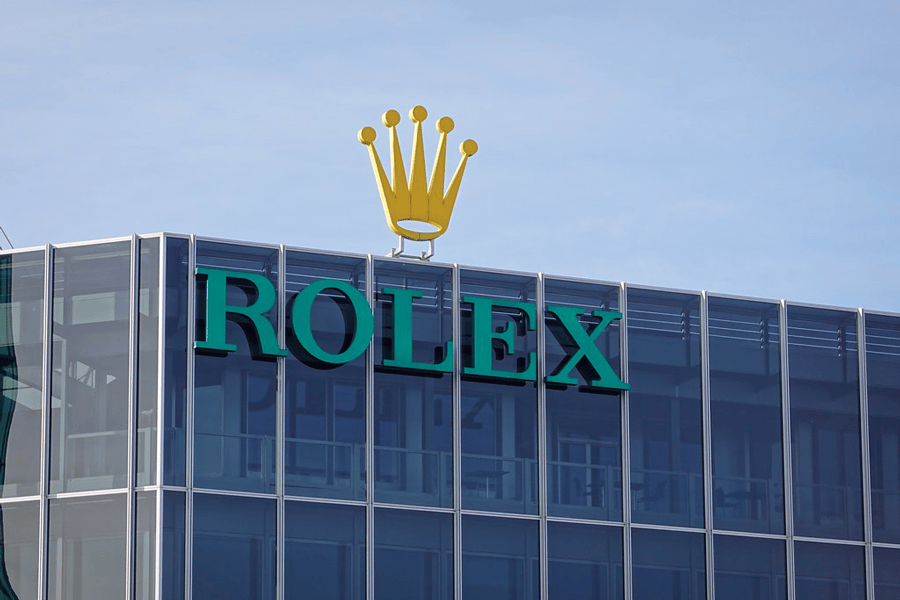
Few names in the watch world carry as much weight as Rolex. Even people who have never owned a mechanical watch recognize the crown on the dial. To some, Rolex represents craftsmanship and reliability. To others, it is a status symbol, an investment, or simply the watch people buy when they want everyone to know they have made it.
But Rolex didn’t begin as the untouchable luxury giant we know today.
The Man Behind the Crown
The story starts with Hans Wilsdorf, born in Bavaria in 1881. After losing both of his parents at a young age, Wilsdorf eventually entered the watch trade and moved to Switzerland, where he worked in La Chaux-de-Fonds — already one of the most important centers of European watchmaking.
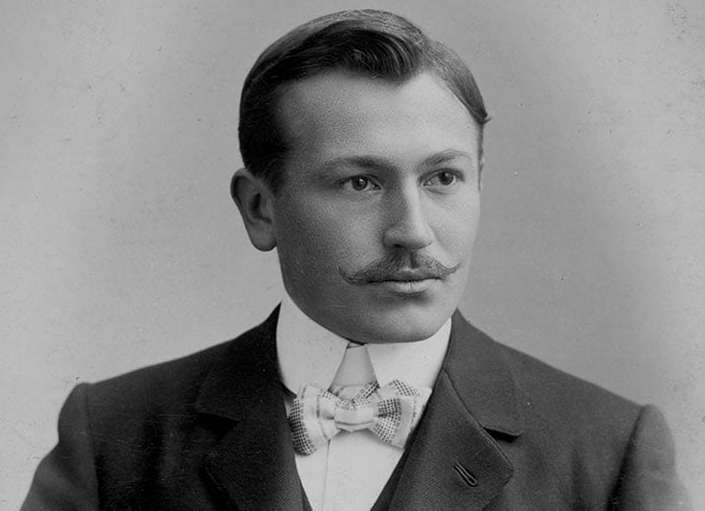
In 1905, he moved to London and established Wilsdorf & Davis with his brother-in-law Alfred Davis.
Wilsdorf wasn’t primarily interested in creating extravagant watches for collectors. He saw an opportunity in something that many people in the industry still viewed with skepticism: the wristwatch.
At the time, pocket watches remained the standard. Wristwatches were relatively uncommon and weren’t always considered serious timekeeping instruments. Wilsdorf believed that could change.
His company sourced Swiss movements and paired them with cases made in England, allowing it to offer reliable wristwatches at competitive prices.
That combination of quality, practicality and smart business would eventually become central to Rolex’s identity.
Where Did the Rolex Name Come From?
There are several stories surrounding the origin of the name “Rolex,” but there is no universally accepted explanation.
What we do know is that Wilsdorf wanted something short and memorable — a name that could be pronounced easily in different languages and looked good on a watch dial.
Rolex ultimately became exactly that.
The company gradually moved its operations to Switzerland, eventually establishing itself in Geneva. The famous five-pointed crown that is now inseparable from the brand appeared during the 1920s.
But the logo alone doesn’t explain how Rolex became Rolex.
More Than a Watch Company
Today, Rolex occupies an unusual position.
It manufactures luxury watches, but calling Rolex simply a luxury watchmaker doesn’t fully describe what the brand has become.
Rolex is craftsmanship.
Rolex is marketing.
Rolex is status.
Rolex is resale value.
Rolex is collecting.
And, for some buyers, Rolex is an investment.
Few watch companies have managed to combine all of those things so effectively.
The result is a brand whose watches can be difficult to purchase from authorized retailers while certain desirable references trade for substantial prices on the secondary market.
That scarcity has also created one of the stranger environments in modern watch collecting. Buying a Rolex isn’t always simply a matter of walking into a store, choosing your favorite model and paying for it.
For highly sought-after pieces, the buying experience itself has become part of the Rolex conversation.
Strip Away the Hype
There’s another side of Rolex that sometimes gets lost underneath discussions about waiting lists, resale prices and status.
They’re watches.
And generally, very capable ones.
Rolex built much of its reputation around producing robust mechanical watches designed to work in the real world. Exploration, diving, aviation, motorsport and travel have all played important roles in the company’s history and advertising.
That philosophy can still be seen throughout its modern catalog.
A Rolex isn’t supposed to be a delicate object that spends its entire life inside a safe. Models such as the Submariner and Explorer built their reputations around the idea that a luxury mechanical watch could also be a dependable tool.
That’s arguably one of the biggest reasons the brand has remained relevant for so long.
So, What Is Rolex?
That depends on who you ask.
For a collector, it might be an important piece of watchmaking history.
For an enthusiast, it could be a beautifully engineered mechanical object.
For a dealer, it’s an extremely liquid luxury product.
For someone celebrating a major career milestone, it might represent success.
And for another person, it may simply be the watch they’ve wanted since they were young.
That’s what makes Rolex unusual.
The crown has accumulated so much cultural meaning that the watch on your wrist can represent far more than the mechanism ticking inside its case.
Behind all of the hype, prices, dealer relationships and Instagram wrist shots, however, the fundamental idea remains surprisingly simple:
Rolex became successful by making recognizable, reliable mechanical watches and convincing generations of people that they were worth aspiring to.
More than a century later, that formula is still working.

 Wrist Perspective
Leave a comment